
ISO-9001:2026 Added People to Quality

People are now a Quality Management Systems Issue. What Should Companies Do Next?
As ISO 9001 places greater emphasis on leadership, culture, people, knowledge, change, risk and opportunity, a new question emerges: If you already manage quality as a system, how are you managing the humans—and increasingly the AI agents—responsible for delivering it?
The future of quality management is not another HR initiative. It is the integration of people management into the systems organizations already use to govern performance, risk and continual improvement.
For decades, ISO 9001 has helped organizations turn quality from an aspiration into a managed discipline. Its enduring contribution is the idea that good outcomes should not depend on individual effort or good intentions alone. Organizations need defined processes, clear accountability, measurable objectives, evidence, internal audits and continual improvement. The arrival of ISO 9001:2026 reinforces that philosophy while placing greater attention on leadership, organizational culture, the role of people and the management of change. Yet this evolution raises a fundamental question: If people are essential to the effectiveness of a quality management system, why are the processes governing people so often managed separately from it?
The publication of ISO 30201:2026, Human resources management systems — Requirements, provides an important answer. Organizations now have a requirements-based management-system framework for human resources that can be integrated into the broader management systems they already operate. For companies familiar with ISO 9001, this should feel like a natural extension rather than a new philosophy. The disciplines of planning, accountability, documented information, performance evaluation, audit and improvement are already familiar. What changes is the subject of management: the human capabilities and processes upon which organizational performance depends.
But managing people through repeatable processes is not necessarily the same as managing those processes inclusively. A recruitment process can be efficient yet systematically overlook qualified candidates. A training system can meet its documented requirements while providing unequal access to development. A management review can be completed on schedule without incorporating knowledge from the people closest to operational problems. This is why ISO 30415:2021, Human resource management — Diversity and inclusion, matters. It provides the human-centered guidance needed to examine participation, access, leadership, organizational culture, barriers and outcomes. ISO 30415 is a guidance standard, while ISO 30201 establishes requirements for an HR management system. Their functions are distinct, but complementary.

Together, these standards create an opportunity to rethink how people management works. ISO 9001 provides the established quality-management infrastructure. ISO 30201 provides the formal architecture for managing human resources. ISO 30415 guides how that architecture can be made more inclusive, responsive and accountable to the people who participate in it. Organizations do not need to construct an entirely separate administrative universe for inclusion. They can extend existing mechanisms for risk assessment, management review, competence, corrective action and continual improvement to address the human conditions that influence performance.
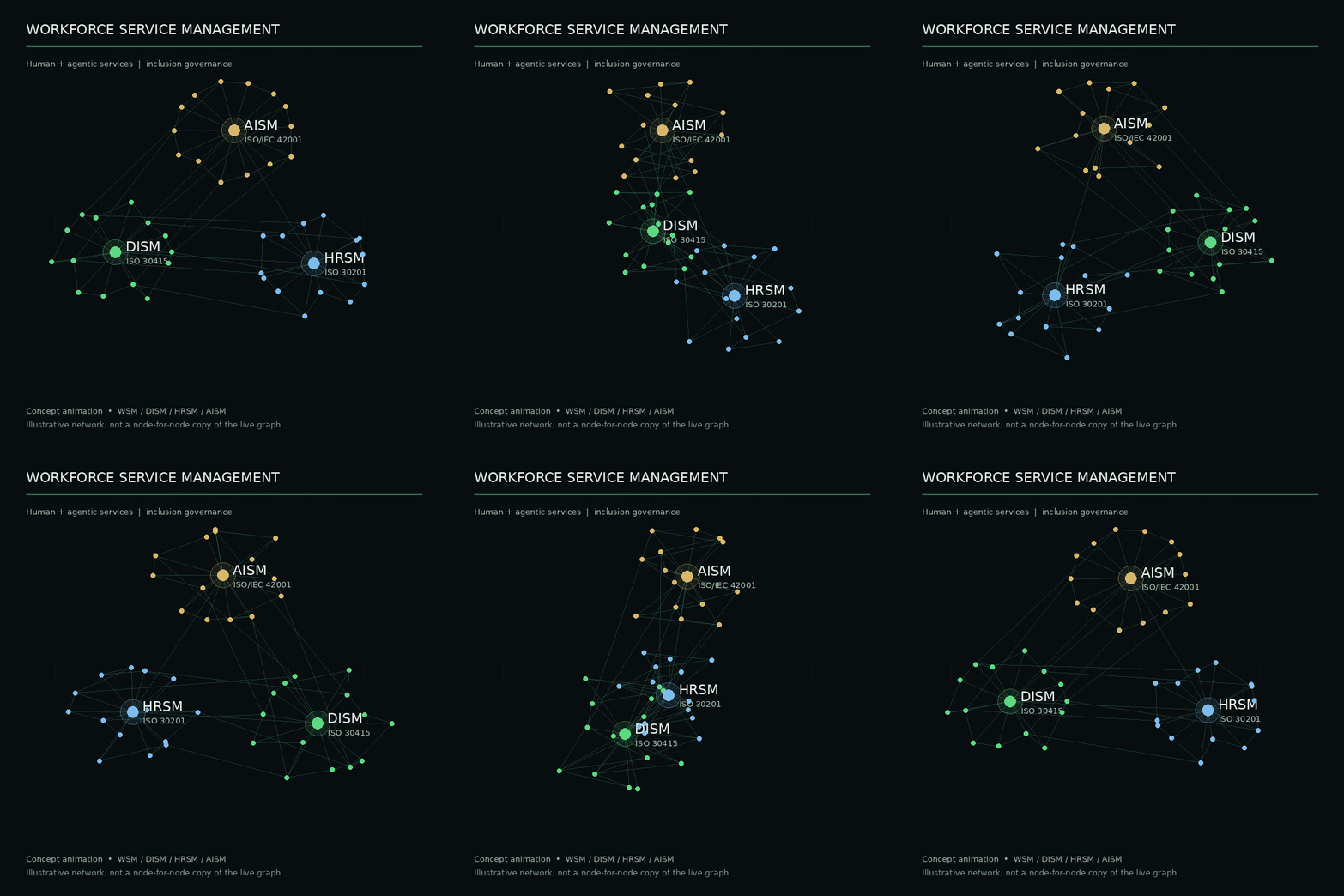
At InclusionScore, we believe this integration becomes even more powerful when management processes are understood as services. Recruitment, onboarding, learning, supervision, performance evaluation and employee support all involve interactions through which value is delivered. By identifying these interactions as measurable services, organizations can examine their volume, velocity and variance, evaluate the maturity of their controls, and understand where risks and opportunities emerge. This is the foundation of Workforce Service Management: making the human interactions within an organization visible, governable, measurable and continually improvable.
The implications extend beyond human resources. As artificial intelligence becomes part of everyday operations, organizations will increasingly depend on interactions between people and intelligent agents. The same management-system discipline that governs quality and human resources must eventually account for those interactions as well. But the starting point is already available. Companies operating ISO 9001 have much of the necessary infrastructure. ISO 30201 provides the people-management architecture, while ISO 30415 offers the human-centered guidance for applying it responsibly.
The opportunity presented by ISO 9001:2026 is therefore greater than updating a quality manual. It is an invitation to recognize that every quality management system depends upon a people management system. Organizations that connect the two, guided by ISO 30415, can begin moving from fragmented HR initiatives toward an integrated, evidence-based and continually improving system for managing human capability. The future of quality is not quality management on one side and people management on the other. It is one organization, operating through connected management systems, with people at the center.


Comments